
Why ESD Control Is Critical in Semiconductor and Electronics Manufacturing
12/5/20253 min read
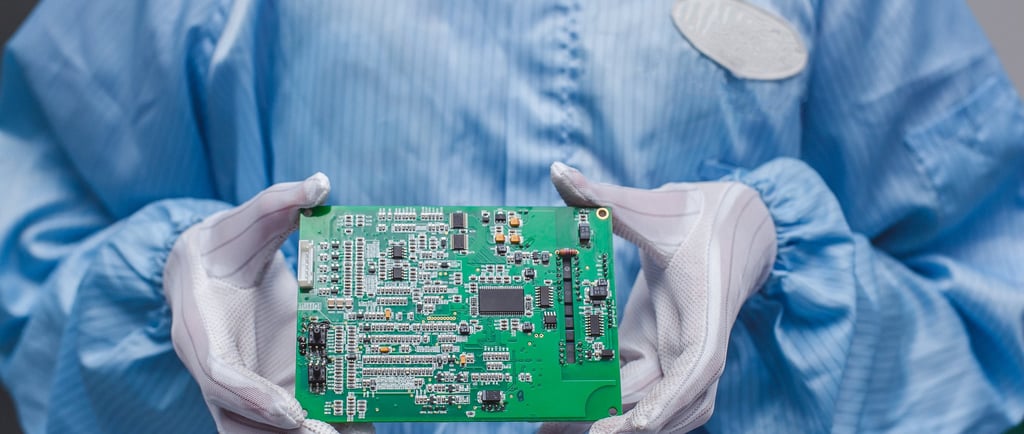
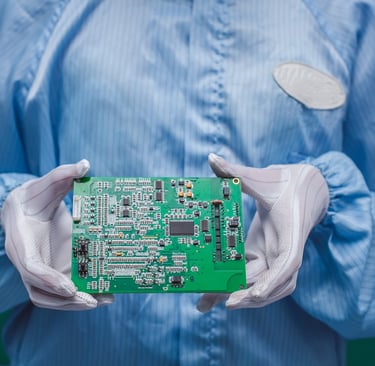
🧪 Why ESD Control Is Critical in Semiconductor and Electronics Manufacturing
(A Technical Guide by Utronex Chip Technologies)
Electrostatic Discharge (ESD) is one of the most invisible yet dangerous threats in electronics manufacturing. A spark so small that the human body cannot even feel it can permanently damage a semiconductor device worth thousands — and worst of all, the failure may not happen immediately, but months later inside a customer’s product.
This is why ESD control is not just a good practice — it is a mandatory requirement in every semiconductor fab, ATMP/OSAT facility, PCB assembly line, aerospace electronics unit, and cleanroom manufacturing environment.
⚡ What is ESD?
Electrostatic discharge is a sudden flow of electricity between two charged objects when they come into contact.
It can occur due to:
• Touching a device or PCB
• Friction between materials
• Movement of air or personnel
• Improper handling of components
Even as low as 100 volts of static discharge — invisible to humans — can destroy a semiconductor component that is designed to operate at <5 volts.
💣 How ESD Damages Electronics
ESD causes three main types of failure:
Failure Type Description Impact
Catastrophic Failure Immediate burn-out of IC or PCB track Device fails in manufacturing
Latent Failure Hidden microscopic damage Product fails after customer use — highest risk
Soft Errors Device logic disturbed temporarily Unreliable performance in field
Latent failures are the most dangerous because they lead to warranty claims, product recalls, brand damage, and customer loss.
🧬 Why Semiconductor Devices Are Extremely Sensitive
Modern chips are built with microscopic transistor structures. Each new technology node makes them more vulnerable:
• Nano-scale features
• Thin dielectric layers
• Highly sensitive gate oxide
• Lower operating voltages
Even a tiny ESD event can damage the device internally without visible symptoms, leading to costly failures later.
🔒 ESD Standards in Manufacturing
Global industries follow strict standards such as:
• ANSI/ESD S20.20 – ESD Control Program Requirements
• IEC 61340 Series – Static control in electronics manufacturing
• JEDEC JESD625 – Handling of semiconductor devices
Manufacturers and suppliers must comply with these standards to qualify for semiconductor supply chains.
🧤 Essential Elements of an ESD-Safe Facility
ESD control requires multiple layers of protection. A proper program contains:
1️⃣ Personnel Grounding
People are the biggest static generators.
Required Items:
• Wrist straps and grounding cords
• ESD footwear and heel straps
• Conductive flooring
• Conductive gloves & finger cots
• Garments with conductive threads
Objective: Always keep personnel grounded while handling components.
2️⃣ Workstation & Floor Protection
Because components are most vulnerable during handling.
Required Items:
• Anti-static mats (table/floor)
• Grounding points
• ESD chairs & storage
• Static-dissipative work surfaces
Objective: Prevent static build-up on surfaces.
3️⃣ ESD-Safe Materials & Packaging
ESD damage often happens during storage or transportation.
Required Items:
• ESD shielding bags
• Moisture barrier bags (MBB)
• Wafer carriers, cassettes, gel boxes
• ESD bins, trays, and totes
• Conductive tapes & labels
Objective: Maintain ESD safety even outside cleanrooms.
4️⃣ Environmental Control
Air movement = static generation.
Required Systems:
• Ionizing air blowers & guns
• Humidity control (40–60%)
• Air filtration & proper grounding
Objective: Neutralize static charges in the air.
5️⃣ Monitoring & Testing
ESD equipment must be regularly verified.
Examples:
• Wrist strap testers
• Surface resistance testers
• Grounding point verification
• Floor analyzer
Objective: Ensure continuous compliance.
🧩 One Weak Link = Complete System Failure
A facility may have ESD flooring and cleanroom PPE,
but one ungrounded operator can destroy hundreds of chips in seconds.
ESD control is successful only when all elements work together:
Prevention + Protection + Monitoring = Zero Defects
🏭 Industries Where ESD Protection Is Mission-Critical
Industry Why ESD is dangerous
Semiconductor / ATMP Nano-scale device sensitivity
EMS & SMT High handling during assembly
Aerospace & Defence Safety-critical systems
Medical Electronics Patient-critical equipment
Automotive Electronics Vehicle safety & reliability
Any electrical failure in these applications may result in life-threatening consequences.
💼 The Business Impact of Poor ESD Control
Risk Consequence
High rejection rate Material & production loss
Latent failures Warranty & brand damage
Downtime Lower productivity
Audit failure Lost customer contracts
➡ A small investment in ESD solutions → huge savings in production and warranty costs.
🌐 How Utronex Chip Technologies Helps
Utronex supplies complete ESD-safe and semiconductor handling solutions that meet international compliance standards, including:
• Wrist straps, footwear, gloves & garments
• Anti-static mats, flooring & surface grounding
• ESD containers, trays & shielding bags
• Ionizers, monitoring equipment
• Wafer carriers, pods & gel boxes
• Cleanroom wipes & controlled consumables
We support:
✔ Product selection
✔ ESD program planning
✔ On-site testing and validation (if required)
✔ Commercial supply Pan-India
Our mission:
Precision Delivered. Protection Assured.
🏁 Conclusion
ESD is a silent killer in semiconductor and electronics manufacturing.
A single spark can destroy millions of dollars in product, even before you notice.
A properly designed ESD control program ensures:
• Stable product performance
• Zero-defect manufacturing
• Customer trust and brand value
• Compliance with global standards
With the right ESD systems in place, factories protect both products and profits.
🚀 Ready to strengthen your ESD control program?
Contact Utronex Chip Technologies to implement the right products and procedures for your facility.
📞 +91 894 308 6047